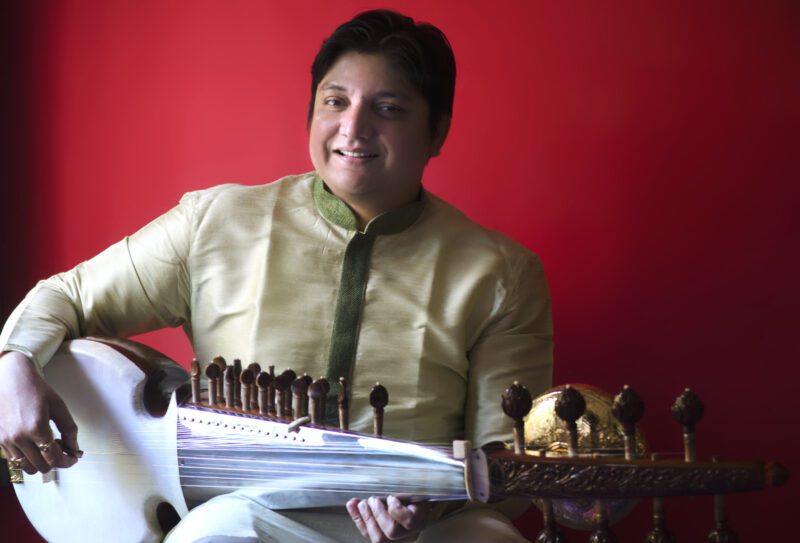
In the early 1980s, when I was still a small boy, my father brought home a recording that changed the direction of my life. It was a jugalbandi album featuring Ustad Ali Akbar Khan on Sarode, Pandit Ravi Shankar on Sitar, and Ustad Alla Rakha on Tabla. In North Indian Classical music, jugalbandi is often understood as a duet, but what I heard in this recording felt like much more than that. It felt like a living conversation—three great musicians speaking through sound with such emotional force that even as a boy, I was completely drawn in. I could not understand the grammar of the music at that age, nor could I explain what made it so powerful. But I knew, with absolute certainty, that something essential in me had been touched. I listened to that album again and again, day and night. Among its two ragas, Raag Shree left a particularly deep impression on me. There was something in its gravity, depth, and inward pull that opened a door in my heart before I had the maturity to name what I was hearing.
Looking back now, I feel that this was the first music that established my emotional bond with North Indian Classical music. It was not simply beautiful sound. It was emotion unfolding in real time. It was dialogue, tension, surrender, and revelation. Many years later, after decades of study, performance, and listening, I can better understand why that recording entered me so deeply. Ustad Ali Akbar Khan’s Sarode carried a truth of sound that went beyond virtuosity. Pandit Ravi Shankar’s Sitar responded with brilliance, elegance, and personality. Ustad Alla Rakha did not merely accompany; he gave life, breath, and movement to the exchange. Together, they created an experience that was at once intimate and vast. That recording did not just introduce me to a musical tradition. It made me want to live inside that world. In many ways, everything I have pursued in music since then began with that first encounter. Even today, when I return to Raag Shree from that album, I do not feel I am revisiting an old recording. I feel I am returning to the very moment when music first called me toward my life’s path.